Unknown's avatar

About elizabethbuhmann

Author of Mystery Novels--Lay Death at Her Door, Blue Lake, Accidents of Life, and Freewheeling--plus a new detective series, Murder on the Gulf Coast.

Leopard Section

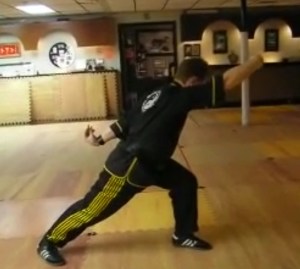
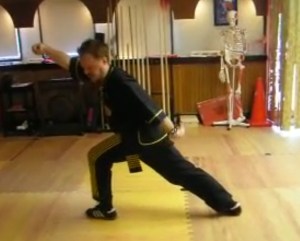
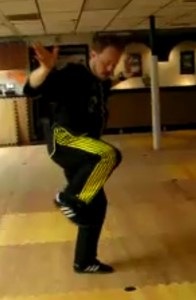
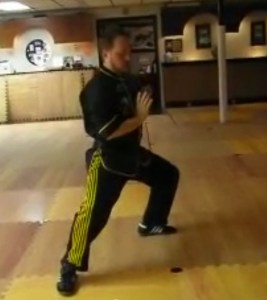
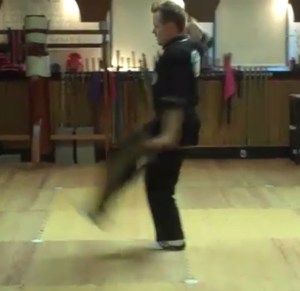
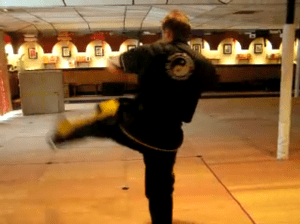
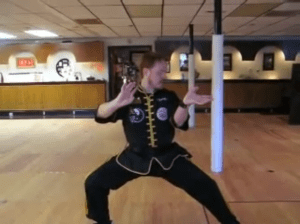
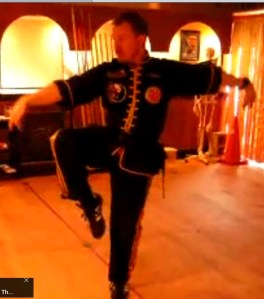
Continuing with the Hung Gar Tiger Crane Set. After Poison Hands and Iron Body is the Leopard Section. I have three videos to work with:

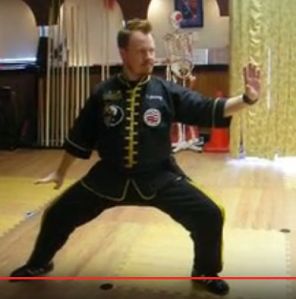
Leopard section: Suppress the Tiger

Leopard section: Suppress the Tiger

The names of the movements are as follows:

  • White Horse Offers Front Leg
  • Suppress the Tiger
  • Pearl Bridge
  • Press Ten Thousand Pounds
  • Dragon Leaps from Sea
  • Leopard Palms a Tree Trunk
  • Leopard Breaks its Prey
  • Leopard Breaks its Prey
  • Leopard Smothers its Prey
  • Arhat Exits the Cave
  • Crosscutting Bamboo
  • Divide the Grass in Search of Snakes
  • Throw a Ball Through a Wave

REPEAT ALL on the other side. Then:

  • Kicking Star Method
  • Double Bow Hugging the Moon
  • Children Bow to Buddha
  • Leopard Pulls Back
  • Cornered Leopard Fights Back

Finally, for review, here is a demonstration by Head Instructor Hunter of the first three sections, at a walk-through pace. We haven’t yet learned the Five Animal Salute that you see at the beginning and end.

Iron Body

Returning to the Hung Gar Tiger Crane set. A while back I posted links and names for the first section, Poison Hands. Iron Body is the second section.

Buzzard folds his wings

Iron body- Vulture folds his wings

I’ve got three good videos to work from:

The names of the movements are:

Sweep in front, sweep behind
Raise the sun and moon
Vulture folds its wings
Double bow spears the flower
Duck traverses water
Press ten thousand pounds
Double dragons leap from sea
Establish an iron bridge
Soft bridge left
Soft bridge right
hero holds a pot
Scoop the moon from the bottom of the sea
Crane flashes wings
Crane folds wings
Twin daggers cut the bridge
Tiger defends left
Tiger defends right
Tiger defends behind
Tiger cleans its whiskers

As a bonus, I’ve found the Chinese names for the first four names in the Poison Hands section–not in characters or standard Pinyin, just phonetic. Still looking for a proper list.

Fu hu qian long — qian is hide
Mei ren zhao jing — zhao is to regard one’s image, jing is mirror
Xie feng bai liu — liu is willow
Xiu li cang hua — xiu is sleeve, or tuck into sleeve; cang is hide

Yi Jian Mei Taiji Jian

Yi Jian Mei (One Plum Blossom) is a lovely sword form about which I have been able to glean very little information. I’m told it was created by a master who has passed away–I don’t know his name. The name of the form is the title of a very popular song as well as a drama. I haven’t found out much about them, either.

Yi Jian Mei: song and lyrics

But I have managed to learned the form using this instructional video; if the name of the performer is given, it’s in Chinese. The setting is beautiful, wherever it is.

There is also a performance by the same man with the music. This video even offers an inset showing him from a different angle.

For more on this form — including names f the movements and lyrics to the song, See this post: https://taichinotebook.com/2016/07/14/yi-jian-mei-names/.

Laojia Yilu: End of Section 4

We are up to the end of Part the Wild Horse’s Mane, Ye Ma Fen Zong, which is followed by Liu Feng Si Bi and Single Whip. I haven’t found a video that shows the transition from Ye Ma Fen Zong to Liu Feng Si Bi. We left off in this position:

YMFZ

His weight is shifted to his left, and he is facing away from front (front being the way you face at the start of the form). The transition is as follows:

  1. Circle counterclockwise to block down and to the right, while shifting to the right.
  2. Circle counterclockwise again to block down and shift all the way to the left.
  3. Ball-change to turn 180 degrees (to face front) and put the right foot where the left foot was.
  4. Circle counterclockwise again to start Six Sealing Four Closing (Liu Feng Si Bi).

Follow Liu Feng Si Bi with Single Whip as usual. Now we’re ready for Fair Lady (or Jade Maiden) Works the Shuttle (or the Loom). Either way, it’s Yu Nu Chuan Suo, which is why I like to learn the names in Chinese: Jade Maiden, Fair Lady, Loom, Shuttle–these are just different translations.

We’ve got three video clips by Grandmaster Gohring for this one:

This move is so interesting. It occurs in so many different forms–the Yang 108, 24, 42, Laijia Yilu, and Laojia Erlu–which are all the empty hand forms I know. The Yang versions are all fairly similar, but the Chen versions in Laoia Yilu and Laojia Erlu are pretty different.

Yu Nu Chuan Suo in Laojia Erlu is this one, with the crossed wrists, four quick half-steps (we call them bamboo steps, but really, the name is ban bu, ban=half, bu=step) to stage right:

Advance with bamboo step right

Fair Lady, Laojia Erlu

We are learning Cheng Jincai’s Laojia Yilu, which is certainly authentic, but it’s quite different from what the Chen masters in China are currently doing. For comparison, here is Chen ZiQiang (Fair Lady is at about 6:35):

In 42, we do Chen-style Ye Ma Fen Zong. The move as I know it does not much resemble what we’re learning in section four of laojia; it’s closer to what Chen ZiQiang is doing. But then, 42 is a modern form. Laojia is a very old form. The oldest! So it’s not surprising that it has diverged as it has been handed down by different masters over the years.

Laojia Yilu: Tricks and Horse’s Mane

In section four, after the single whip that follows Push Mountain (Tui Shan), we do forward and backward tricks and Part the Wild Horse’s Mane right and left:

  • Forward Move (Qian Zhao)
  • Backward Move (Hou Zhao)
  • Part the Wild Horse’s Mane (Ye Ma Fen Zong)

Zhao (招) means maneuver, move, or trick. Here’s the video:

Part the Wild Horse’s Mane:

And finally, a video of section four through Part the Wild Horse’s Mane:

Ready for Yu Nu Chuan Suo and the end of section four!

Laojia Yilu: Begin Section 4

I left off at the end of section three, with Yan Shou Gong Quan. Next comes the Small Grab and Hit (Xiao Qin Da) and Embrace the Head Push the Mountain (Bao Tou Tui Shan). Master Gohring has made video instruction and demonstration for both moves.

Small Grab and Hit 1

Small Grab and Hit 1 (instruction)

And for Embrace the Head Push the Mountain. This move, by the way, is for when somebody grabs your hair! Also called Protect the Head Push the Mountain, but Bao does mean embrace.

These two movements are followed by Liu Feng Si Bi and Single Whip. This video shows how to get into Liu Feng Si Bi from the push:

Next up: Forward and Backward Tricks and Ye Ma Fen Zong, which I can’t wait to learn. I am hoping that the Chen Part the Wild Horse’s Mane is going to help me with 42-form. We’ll see.

Laojia Yilu: Rest of Section 3

I left off with the double jump kick, Ti Er Qi, but before I move on, I found some more supporting video by Master Gohring for the double jump kick, Ti Er Qi.

tierqi

Now moving on: Protect the Heart, Hu Xin Quan (more literally, fist protects the heart). This move occurs in the Chen 38 (short form) and Laojia Erlu as well as in Laojia Yilu, and it’s a little different in each. What is in common is the backfist with the right, the pull-down with the left, and the fajin. Here’s some great instruction for Hu Xin Quan in Laojia Yilu:

huxinquan

Here is the Ti Er Qi/Hu Xin Quan sequence:

tihu

Next up is the tornado kick. Xuan is loop, circle or whirl. Feng is wind. Whirling wind kick (or foot). For us Texans, whirling wind brings to mind a tornado, so we call it a tornado kick. Here is the instruction:

tornado

More explanation of Xuan Deng Jiao:

xuandeng

The tornado kick is followed by a repeat of Deng Yi Gen, this time on the right and Yan Shou Gong Quan. So this whole section goes as follows:

Protect the Heart (Hu Xin Quan)
Tornado Kick (Xuan Deng Jiao)
Right Side Kick (You Deng Yi Gen) (pronounced dung ee gun, by the way)
Hidden Hand Punch (Yan Shou Gong Quan)

Finally, as a little video bonus, here is a more general bit of instruction about the Chen-style stance. It took me a while to figure out how to protect my knees while doing Chen, and this is a great summary that I will do well to study again.

howlow

Laojia Yilu Continued

We’d gotten up to the first Hidden Hand Punch. The next thirteen movements are exactly the same as the Chen 38, as follows:

Jin Gang Dao Dui (3rd Buddha Stamp)
Pie Shen Quan (Fist Across the Body)
Qing Long Chu Shui (Blue-green Dragon Leaps from the Sea)
Shuang Tui Shou (Double Push-Hands)
Zhou Di Kan Quan (Looking at the Fist Under the Elbow)
Dao Juan Gong (Whirling Wind Arms)
Bai He Liang Chi (White Crane Spreads Wings)
Xie Xing (Oblique Form)
Shan Tong Bei (Fan Through Back)
Yan Shou Gong Quan (2nd Hidden Hand Punch)
Liu Feng Si Bi (Six sealing Four Closing)
Dan Bian (Single Whip)

Yun Shou (Cloud Hands) is slightly different: we add one extra repetition (left hand extended, step across behind with the right; right hand extended, step aside with the left). Then proceed to Gao Tan Ma (Pat High Horse).

What follows is a short kicking section, consisting of three moves: Pai Jiao with the right, Pai Jiao with the left, and a left sidekick, which I would have called Chong (it seems to be the same as the sidekick we did in Laojia Erlu. Here’s Grandmaster Gohring demonstrating the two Slapping kicks:

chong

On some lists, the Pai Jiao is called Tsa (or Ca, pronounced the way Tsa looks), which is variously translated as slap, rub, or brush the foot. The side kick is called Deng Yi Gen (which makes it a heel kick, literally on one root).

After the three kicks, we repeat Shang San Bu (Advance Three Steps). We then punch to the ground, turn around, do a double jump kick, land and turn to the left. Here’s the video for these moves, with instruction:

sidekick

For names and translations, the list on the Madison Chen Style Tajiquan website is particularly useful because it includes the Chinese characters. Here’s the list for the new material in this post:

You Tsa Jiao – Brush the right foot
Zuo Tsa Jiao – Brush the left foot
Zuo Deng Yi Gen – Kick with Left Heel
Shang San Bu – Advance Three Steps
Zhi Di Quan – Punch the Ground
Ti Er Qi – Double Jump Kick

Next up, Protect the Heart.

Poison Hands

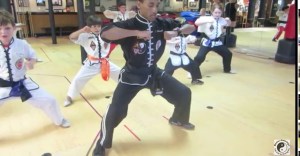
We are learning the Kung Fu Tiger Crane 108 as our secondary project in class (Laojia Yilu is our primary focus). The first section of the 108 is Poison Hands, a study of just the blocking movements with the hands.

poisonhands

The names (translations) we use are as follows. So far, I’ve had no luck finding Chinese names.

  • Suppress the Tiger Hide the Dragon
  • Beauty Looks in the Mirror
  • Crosswind Bends the Willow
  • Push the Flower Up the Sleeve
  • One Finger Divides China
  • Press Ten Thousand Pounds
  • Dragon Leaps from the Sea
  • Dragon Plays in the Water
  • Four Fingers Face the Sky
  • Dragon Serves the Pearl
  • Dragon Spits the Pearl

Repeat on the other side, except after Dragon Serves the Pearl comes Wind Punching Method. Video resources:

Fan II – Section 2

Starting after Bend Bow Shoot Tiger at the end of section one, I’m following the instructional video by Li De Yin.

10. Resting stance, carry fan (Xie bu dai shan). The traditional name is Gǔ Shù Pán Gēn, or Uproot the Old Tree, a name that also occurs in double saber, where it’s a 360 turn and a chop down. The breakdown:

  • Turn the waist swing the fan across – zhuǎn yāo bǎi shàn. Bai can mean show or move back and forth.
  • Resting stance, carry fan – xiē bù dài shàn.

It doesn’t sound like either of these fan movements is a strike, and in the demo, they don’t look like strikes, but Gu Shu Pan Gen is a chop down, so maybe they’re based on a striking movement (down). Basically, the saber and fan movements of the same name are not very similar! I can’t see it.

Professor Li, Xie Bu Dai Shan

Professor Li, Xie Bu Dai Shan

11. Point foot, reveal fan (diǎn bù liàng shàn). The traditional name is Chú Yàn Líng Kōng, or Baby Swallow Flies in the Sky. The breakdown:

  • Stamp foot, pound fan – zhèn jiǎo zá shàn.
  • Point foot, reveal fan – diǎn bù liàng shàn

Dian bu is new to me. I would have called in xu bu. Same thing? Seems to be. I recently learned that xu bu can be either toe or heel down, so maybe this just specifies that it’s xu bu with the toe.

12. Resting stance, embrace cloud (Xie bu yun bao). The traditional name is Tian Nu San Hua, or Beautiful Lady Spreads Flowers. The breakdown:

  • Open stance, embrace fan – kāi bù bào shàn.
  • Lean back the head and work the fan – yáng tóu wǔ shàn.
  • Resting stance, embrace fan – xiē bù bào shàn.

Start with the wrists crossed, fan held in front of the chest, open the arms in a big circle so they meet overhead and circle the wrist that holds the fan, Fold the fan down to the chest again. The key here is not to be lazy (as I sometimes am), but to get the fan all the way up there.

Circling way up there over the head. This is Professor Li's wife demonstrating.

Circling way up there over the head. This is Professor Li’s wife demonstrating.

13. Bow stance, cut down (Gong bu xia jie). The traditional name is Yan Zi Chao Shui, or Swallow Touches Water (small swallow, actually), a name from sword form that invokes the image of a swallow skimming the surface of the water. The breakdown:

  • Turn body, turn over fan – zhuǎn shēn fān shàn.
  • Bow stance, cut down (with) fan – gōng bù xià jié shàn.

14. Embrace fan snap kick (Bao shan dan ti). The traditional name is Huai Zhong Bao Yue, or Embrace the Moon, which is familiar from sword form as the posture of standing on one leg, embracing the sword, which is pointed upward. I notice that in the demo, the kick can be held momentarily, pointing up (for those who can do that). The breakdown:

  • Step up, close fan – shàng bù hé shàn.
  • Embrace fan, snap kick – bào shàn dàn tī.

15. Bow stance, push fan (Gong bu tui shan). The traditional name is Shun Shui Tui Zhou, Push Boat with Current. This one caught me by surprise! I was looking up each character when I recognized where it was going. This move is in every sword form. I didn’t recognize it in the fan version, because the fan is vertical, not pointing away as the sword would be. The breakdown:

  • Turn the waist, spiral the fan – zhuǎn yāo rào shàn.
  • Bow stance, push fan – gōng bù tuī shàn.

16. Chop [with] fan, stretch palm forward (Pi shan tan zhang). The traditional name is Bai She Tu Xin, or White Snake Spits Out its Tongue. The breakdown is:

  • Bow stance chop fan – gōng bù pī shàn.
  • Carry (hanging down) by the leg, extend palm forward – tí tuǐ tàn zhǎng.

17. Dance flowers, hit fan (Wu hua ji shan). This is a movement I was particularly interested in getting clear about. I find it a bit tricky!

The traditional name is Wu Song Tuo Kao, or Wu Song Breaks the Handcuffs. This is a movement in Kung Fu; here’s an interesting article from KungFuMagazine.com. Wu Song is a character in a traditional Chinese novel. The short version (which I got from Pan Huai) is that (handsome) Wu Song discovered that his short elder brother’s beautiful wife had an affair with a rich man, so Wu Song killed her. He was arrested, but broke the manacles and escaped to live a Robin-Hood life with bandits.

The breakdown on the fan version of breaking the handcuffs is as follows (translations dicey!):

  • Set down the foot, back and forth step, thread the palm – luò jiǎo bǎi bù chuān zhǎng.
  • Fasten step, close fan – kòu bù hé shàn
  • Point foot hit fan level – diǎn bù píng jī shàn.

Based on what Long Feng as shown me and slow motion vdieo, it looks like this:

Step left and circle the fan shut toward you.

Step left and circle the fan shut toward you.

  • Set down the left foot and cross the inside wrists, fan-hand (right) on top. Catch the edge of the fan with the left outside fingertips.
  • Set down the right heel and pivot to the right, turning to the right at the waist, and use the left hand to close the fan. The right wrist circles inwards. (above)
  • Pivot the right heel to front, shift onto the right, and snap the fan open horizontally, left xu bu. The left hand naturally lands on the right arm.
Stepping right, turning to the right before facing front to snap the fan open.

Stepping right, turning to the right before facing front to snap the fan open.

Best bet for learning this move (unless you have someone to show you): watch Faye Li Yip in Scotland, using the gear symbol at the bottom of the video screen to set the speed at .25, and watch at about 1:23.