Hua Wu Fan §3

I am loving Hua Wu Fan, now learning section three, which includes the Weeping Willow, the Drunken Beauty and the Moon Goddess, Cháng’é, who flies to the moon (below):

moongoddess

Here are the names for the third section:

  1. 迎月花开 Yíng yuè huā kāi: Flower Opens to the Moon
  2. 白蛇吐信 Bái shé tǔ xìn: White Snake Sticks out its Tongue
  3. 玉女穿梭 Yùnǚ chuān suō: Fair Lady Works the Shuttles
  4. 迎风掸尘 Yíng fēng dǎn chén: Face the Wind and Brush Away Dust
  5. 海底捞针 Hǎi dǐ tàn zhēn:  Search the Bottom of the Sea
  6. 二龙戏珠 èr lóng xì zhū: Two Dragons Play with a Pearl
  7. 青蛇出洞 Qīng shé chū dòng: Bluegreen Snake Leaves the Cave
  8. 倒挂垂柳 Dàoguà chuíliǔ: Weeping Willow Hangs Down
  9. 贵妃醉酒 Guìfēi zuìjiǔ: The Drunken Beauty [Beijing Opera!]
  10. 嫦娥奔月Cháng’é bènyuè: Moon Goddess Flies to the Moon
  11. 拨云观日 Bō yún guān rì:  Part the Clouds to See the Sun
  12. 蛟龙翻身 Jiāolóng fānshēn: Flood Dragon Turns Over

According to Pengyou Taiji Quan (Friends of Tai Chi), Zhongji Hua Wu Shan is taught at the Huawu Gongfu Centre (no website) in Fuzhou, capital of Fujian Province in China, north of Guangdong, south of Shanghai.

I’ve noted elsewhere that this form was created by martial arts coach Zeng Nai Liang and Hu senior lecturer Wei Xianglian. I see that Master Zeng, one of the top ten martial arts  coaches in China, visited Jason Leung’s academy right here in Texas in 2011. So sorry I missed that!

The Drunken Concubine

It is a most enjoyable challenge figuring out the Chinese names for movements, more fun than working the NYT Sunday crossword puzzle. For Huawu Fan I have an English translation, typically loose, and a fuzzy image of the Chinese characters. I am amazed every time I come up with the name, especially when random characters snap together to form a well-known phrase.

For example, the English-only list for Huawu Fan says #29 is “Concubine gets drunk on wine.” I have this image from the video:
move29

I look up wine (红酒) and drunk  (醉) in the dictionary and ID two of the characters in the image.  I look up concubine and get this 妾, which is not what I see. I successfully draw the character I see and get this: 妃 (Imperial Concubine). I am stumped by the remaining character.

After several attempts, I draw what looks right: 贵. It means expensive, so I’m not sure. But when I assemble the four characters in order (贵妃醉酒) and enter them in the dictionary, presto! The dictionary recognizes the name of a Qing Dynasty Beijing opera Guìfēi Zuìjiǔ known as The Drunken Beauty.

drunkenbeauty

See the name? It’s the four characters I’m looking for. Forget the English, the move is called Guìfēi Zuìjiǔ, after the opera. Roughly phonetically gway fay jway joe. The movement looks like this:

drunkenbeautyvid

That name is in section 3. Here are the names for section 2. I am coming to appreciate this performer’s precise execution of the form: 中級華武四十二式太極扇.

  1. 青龙出水 Qīng lóng chū shuǐ – Bluegreen Dragon Emerges the Water
  2. 彩蝶飞舞 Cǎi dié fēi wǔ – Colorful Butterfly Flutters in the Breeze
  3. 弯弓射雕 Wān gōng shè diāo – Bend Bow Shoot Vulture
  4. 翻江倒海 Fān jiāng dào hǎi – Overturn the Rivers and Oceans
  5. 怀中揽月 Huái zhōng lǎn yuè – Embrace the Moon
  6. 燕子抄水 Yànzi chāo shuǐ – Swallow Skims the Water
  7. 金鸡独立 Jīn jī dúlì – Golden Rooster Stands on One Leg
  8. 风卷荷叶 Fēng juǎn hé yè – The Wind Curls the Lotus Leaf
  9. 顺水推舟 Shùn shuǐ tuī zhōu – Push Boat with Current
  10. 白鹤亮翅 Bái hè lìang chì – White Crane Spreads Wings
  11. 羽扇划江 Yǔ Shàn huá jiāng – Feathered Fan Paddles the River
  12. 仙女观灯 Xiānnǚ guān dēng – Spirit Woman Gazes at a Lantern

As with other fan forms, this one includes a number of names familiar from sword forms, with the fan movements mimicking swordplay. And where the sword forms feature Xianren, the Immortal, the fan form names Xiannu, the Spirit Woman.

Interesting to note that 顺水推舟 (Shun shui tui zhou), push boat with current, is an idiomatic expression for taking advantage of a situation. Turning events to one’s own benefit. Pushing the boat with the current!

42-Sword Names

There are any number of nice videos of 42-sword being performed in tournaments. I especially like this one:

42tournament

I have put together a list of names of the 42 movements. I couldn’t find a list in Chinese (I could if I could read and write Chinese for real) so I worked backwards from English and listened to Master Wu’s instructions. I’m pretty sure this is right. Most of the vocabulary is familiar from stances and sword techniques as well as 32-sword and Wudang Tai Chi sword.

  1. 起势 Qǐshì
  2. 并步点剑 Bìng bù diǎn jiàn
  3. 弓步削剑 Gōng bù xiāo jiàn [xiao=diagonal upward slash]
  4. 提膝劈剑 Tí xī pī jiàn
  5. 左弓步拦 Zuǒ gōng bù Lán
  6. 左虚步撩 Zuǒ xū bù liāo
  7. 右弓步撩 Yòu gōng bù liāo
  8. 提膝捧剑 Tí xī pěng jiàn  [peng=cup hold with both hands]
  9. 蹬脚前刺 Dēng jiǎo qián cì
  10. 跳步平刺 Tiào bù píng cì
  11. 转身下刺 Zhuǎn shēn xià cì
  12. 弓步平斩 Gōng bù píng zhǎn [zhan=slash or behead]
  13. 弓步崩剑 Gōng bù bēng jiàn
  14. 歇步压剑 Xiē bù yā jiàn
  15. 進步搅剑 Jìn bù jiǎo jiàn [jiao is a stirring motion)
  16. 提膝上刺 Tí xī shàng cì [ti xi=duli]
  17. 虚步下截 Xū bù xià jié
  18. 右左平带 Yòu zuǒ píng dài
  19. 弓步劈剑 Gōng bù pī jiàn
  20. 丁步托剑 Dīng bù tuō jiàn
  21. 分脚后点 Fēn jiǎo hòu diǎn [hou=back; hou dian=point back]
  22. 仆步穿剑 Pū bù chuān jiàn
  23. 蹬脚架剑 Dēng jiǎo jià jiàn
  24. 提膝点剑 Tí xī diǎn jiàn
  25. 仆步横扫 Pū bù héng sǎo
  26. 右左弓步下截 Yòu zuǒ gōng bù xià jié
  27. 弓步下刺 Gōng bù xià cì
  28. 右左云抹 Yòu zuǒ yún mǒ
  29. 右弓步劈剑 Yòu gōng bù pī jiàn
  30. 后举腿架剑 Hòu jǔ tuǐ jià jiàn [lift leg back]
  31. 丁步点剑 Dīng bù diǎn jiàn
  32. 马步推剑 Mǎ bù tuī jiàn
  33. 独立上托 Dúlì shàng tuō
  34. 進步挂点 Jìn bù guà diǎn
  35. 歇步崩剑 Xiē bù bēng jiàn
  36. 弓步反刺 Gōng bù fǎn cì
  37. 转身下刺 Zhuǎn shēn xià cì
  38. 提膝提剑 Tí xī tí jiàn
  39. 行步穿剑 Xíng bù chuān jiàn
  40. 摆腿架剑 Bǎi tuǐ jià jiàn [bai tui=swing leg]
  41. 弓步直刺 Gōng bù zhí cì
  42. 收势 Shōu shì

Hua Wu Fan §1

I feel like Sherlock Holmes. Working from an image of the names in Chinese (below), a (somewhat loosely translated) English list, the voiceover of a video, Google translate, and the MDBG online dictionary (which allows me to draw a character if I can get the order of the brushstrokes right), I have arrived at a list of the first eight moves.

section1

Section 1:

  1. 起勢 Qǐ Shì:  Commencing form
  2. 懒扎衣 Lǎn Zā Yī: Lazily Tying the Robe
  3. 丹凤朝阳 Dān Fèng Cháoyáng: Red Phoenix Greets the Sun
  4. 推波助澜  Tuī  Bō Zhù Lán: Push the Waves Even Higher
  5. 飞雁斜落  Fēi Yàn Xié Luò: Wild Goose Swoops Down
  6. 转身打虎  Zhuǎn Shēn Dǎ Hǔ: Turn Around Hit the Tiger
  7. 叶底采莲 Yè Dǐ Cǎi Lián: Pluck the Lotus Leaf
  8. 孔雀开屏 Kǒngquè kāipíng: Peacock Spreads its Tail

I was puzzling over the meaning of lanzayi. You would tie up a long robe to prepare for a fight. The laziness in this case might have the sense of casualness. Unhurried. Like, confident and unafraid. Maybe even to preserve an element of surprise.

Interesting: Tui Bo Zhu Lan, Push the Waves Even Higher, is a saying that means something like the English “Add fuel to the fire.”

Anyway, here are grabs of these first eight moves, from this video:

1.huawu1  2.huawu2 3. huawu3 4.huawu4 5.huawu5 6.huawu6 7.huawu7 8.huawu8

Wu/Hao Eight Forms

We are beginning a study of Wu/Hao Tai Chi in my class. This is a fifth style of Tai Chi, less well-known that the four styles usually listed (Yang, Chen, Wu and Sun). My teacher, Grandmaster Gohring, knows Grandmaster Jimmy Wong, a sixth generation lineage-holder under Wu Yu Xiang, so we’ll have access to Jimmy as we study.

Wǔ Yǔ Xiāng (武禹襄) was active in the late 19th century. He was a student of Yang Luchan, the founder of Yang style Tai Chi, and also studied briefly with Chen master Chen Qing Ping. One of Wu’s students taught Hao Wei Chen, from whom both the Sun and Wu/Hao, styles are descended. The name Wu/Hao combines the names of these two founders, Wǔ 武 and Hǎo 郝, to form the name 武/郝式 Wǔ/Hǎo Shì (shì is style).

The better-known and older Wu style (吳式, Wú Shì) was created by Wu Quanyou, another student of Yang Luchan, whose family name is 吳 Wú, with rising inflection. For more detail, see Wikipedia on Wu/Hao and Wu-style Tai Chi.

We are starting with the short 8-step form, which is demonstrated by Grandmaster Wong in a nice, clear video that also shows the lineage and the names of the steps, which are as follows:

  1. 武起势 Wǔ Qǐshì
  2. 右懒扎衣 Yòu Lǎn Zā Yī
  3. 左搂膝拗步 Zuǒ lōu xī ào bù
  4. 双 抱捶 Shuāng bào chuí
  5. 栓马势 Shuān Mǎ Shì
  6. 退步懒扎衣 Tuì bù Lǎn Zā Yī
  7. 十字手 Shízì shǒu
  8. 收势 Shōu shì

The character 武 for the surname Wǔ is the same as the character for the Wǔ in wushu, the modern and general term for the Chinese martial arts. In that context 武 wǔ just means martial. In case you noticed that the Hua Wu Fan that I posted about yesterday uses the same character for Wu, it is used in this second sense, as in wushu.

Speaking of Hua Wu Fan, I found several more videos: this is a Nice one! The best! I will use it as my paradigm.

huawu

And several more:

Hua Wu Fan

We have a new member in our practice group who does a lovely fan form I had never heard of: Hua Wu fan. Actually, there are two forms, a beginner form and a mid-level form; our new friend does the mid-level form. I have not heard of a more advanced version, but I assume it must be out there somewhere.

huawushan

All of the videos I have found on YouTube feature the same performer, Master Zeng Weihong (pictured in the grab above) [Not Connie Ho as I originally thought–see Simon’s comment below]. If I had only seen the video, I probably wouldn’t have been especially interested, but after seeing it in person, by Xiao Liao, we all love it,  and we’ve asked her to teach it to us. Here are videos of both forms; we are learning the mid-level one.

The Chinese names of the forms (the names we use) are:

  • 初级华武扇初级 Chūjí  Huá Wǔ Shàn (Primary-level Hua Wu Fan)
  • 中级华武扇 Zhōngjí  Huá Wǔ Shàn (Primary-level Hua Wu Fan)

Shan, of course, is fan. Ji is the word for level or rank. You might recognize the word zhong, for middle: Zhong guo is China—literally middle country. Hua means flowery or splendid. As for the names of the movements, they appear at the beginning of the zhongji video, but only as images of Chinese characters. I did find a list in English, but I am working on deciphering the Chinese. I’ve only figured out a few names so far.

Zhongji Hua Wu Shan is a combined form, with elements of the four main styles (Yang, Chen, Wu and Sun). Unlike the other combined forms I know, which are mostly Yang, this one seems to me mostly Wu (from what little I know about Wu). I read on the Web that the form was created by national martial arts coach Zeng Nai Liang and Hu senior lecturer Wei Xianglian.

42-Sword

This contemporary sword form is a combined form used in competition. It’s difficult, subtle, and sophisticated, with elements of all four major styles of Tai Chi — Yang, Chen, Sun, and Wu. I’m hoping to learn it well enough to work with Hu Pei when she comes back this spring.

houjutui

Hou Ju Tui Jia Jian

On the left, Amin Wu demonstrates one of the more striking and unusual moves in 42-Sword.

As usual, I’m starting with a demonstration video and list of names just to get the rough sequence. The demo is a beautiful video of Amin Wu doing 42-Sword.

I haven’t yet found a definitive list of names in Chinese. I’m still looking. For now, I have two. The first list is Pinyin only, and it seems a bit sketchy (some words appear to be missing). I’d rather have the Chinese and look up the pinyin for myself.

The second list is Chinese, but alas, it’s all images. Not possible to copy and paste into a dictionary to get Pinyin and translation. There is a wealth of good information about Tai Chi sword on Phil Cheung’s page. I wish I could read it better. Here are the links.

I’ve just about got the sequence figured out, so the next step is to get Long Feng to lead me through it and show me some of the more baffling moves. I’ll also work my way through some instructional videos. There are three instructionals that I’ll use. I don’t have Jesse Tsao’s yet. His will be in English.

wufenjiao42

Amin Wu

Li Deyin’s instructional videos are in Chinese, and I wish I could figure out more of the parts where he simply talks, but it’s not hard to follow the demonstrations and specific instructions. I have the DVD, but it’s also on Youtube, in two parts (with lots of commercials, and rather poor video and sound quality, unfortunately).

On Youtube, I also found a complete set of videos with much better visual and audio quality, by Amin Wu, whose detailed instructions are quite clear, especially if you understand some basic instructional vocabulary. Love these!

This should keep me busy until next spring.

Chen Sword Videos and Names

I am brushing up on Chen sword and trying to figure out the names of the movements, of which there are 49–the form is also known as si shi jiu shi taiji jian. My school does Chen sword the way Grandmaster Cheng Jincai teaches it. Most of the material I am looking at online is the version practiced by Chen Zhenglei, Chen Bing, and Chen Ziqiang.

Chen Zhenglei Ch Shui

Chen Zhenglei Ch Shui (emerges from the water)

These three videos are helpful. The first, Chen Bing’s, is great but distractingly, when I view it, it’s displayed in widescreen that it was not intended for, so it’s distorted. Maybe that’s just the way I’m viewing it? Can’t figure out how to fix that.

The second video is Chen Zhenglei. Excellent, clear. The third is Chen Ziqiang, and it is a full instructional video with subtitles. Very helpful, though the subtitles and voiceover are not very well coordinated with the video (the name shown is not always the move he’s demonstrating).

These versions of the form differ from the one I’ve learned in several ways that I’ll note as I go along, but also the openings (Qishi) are different–we simply step left. All three of these masters start with a more typical Chen-style opening step (ca bu).

I have found several lists of names, with a few variations, and differently divided into sections. I’ve referred to all of them to settle on the names I’ll use. The lists are:

The first movement is Chao Yang– Face the Sun. For us, this is a simple movement, holding the sword at chest level in front. Next, Xian Ren Zhi Lu –Immortal Points the Way–is easily recognizable below:

Chen Ziqiang Points the Way

Chen Ziqiang Points the Way

Next, we present the sword, turn in place, take the sword and stand on one leg, stabbing down; then stab level to the left. This is Qing Long Chu Shui–Bluegreen Dragon Emerges from the Water; See Chen Zhenglei at the top of this post doing this move.

The slicing back and forth movement that follows is Hu Xi Jian–Protect the Knees. We do only R/L/R and we stay in place. The move varies according to the number of slices and also because some (Chen Ziqiang for example) travel forward doing this move.

Chen Zhenglei Closes the Door

Chen Zhenglei Closes the Door

Turn to the left and raise the sword as pictured above. This move is called Bi Men Shi–Close the Door–but it can also be called Tiao Lian, or Raise the Screen, a move familiar from Yang sword forms.

Next, Qing Long Chu Shui–Bluegreen Dragon Emerges from the Water again, but a little different. Just a level stab. This is followed by turning and chopping back. That move is called Fan Shen Xia Pi Jian–Turn Back and Chop Down.

Turn back, stamp the foot and stab level. This is Qing Long Zhuan Shen–Bluegreen Dragon Turns its Body. Next, Xie Fei Shi–Slant Flying. In Chen Bing’s list of names, this is the end of the first section.

Chen Yi Dao

I’m reviewing Chen Saber for a demonstration next week. For video, I’m looking at Chen Zhenglai. This sequence is slightly different from what I’m used to, but it’s mostly the same.

Chen Zhenglei performs Chen-shi Yi Dao

Chen Zhenglei performs Chen-shi Yi Dao

Also, Master Gohring has an entire playlist from a workshop that Master Blue Siytangco held at our school a few years ago.

Master Siytangco teaches Chen Saber

Master Siytangco teaches Chen Saber

I’ll combine this post with an earlier one on Chen saber to make a page for the form and link to that from the Moving Forms page.

Yi Jian Mei: Names

From the instructional video on Yi Jian Mei I have gleaned the names of the movements. It wasn’t easy! I took screen shots of the captions, but of course I couldn’t paste the characters into a dictionary because they were images. So I drew them one by one into the MDBG dictionary.

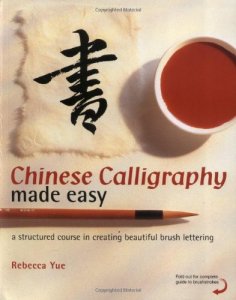
For all but the very simplest characters, the dictionary will not recognize a character unless the brush strokes are entered in (at least approximately) correct order. So from the lovely book shown below, Chinese Calligraphy Made Easy by Rebecca Yue, I learned (more or less) the proper order of brushstrokes. Altogether, this list took hours!

calligraphy

Of course, I could have just asked my friend Pan Huai to translate, but doing it myself the hard way was fun and I learned a lot. Pan Huai did tweak my translations of the movement names, many of which, like traditional names of other forms, are poetic, folkloric, and idiomatic.

Yi Jian Mei was the title of both a 1931 silent movie and a 1984 Taiwanese TV show. The plots are completely different, so I assume the two dramas are unrelated. The song written and recorded by Taiwanese singer-songwriter Fei Yu Qing was the theme for the TV show.

The sword form, which is based on the song, must therefore be less than thirty years old and might be a lot more recent: New versions of the 1984 TV show were made in China in 2000 and 2009. I’ve been told that the sword form was created by a master who is no longer living, but I haven’t been able to find out his name. [Update: See the comments below by Martin Mellish.]

The list of 20 movements is divided into stanzas of the song, and I’ve included the lyrics that go with them. Love the song, the lyrics, and the sword form!