
Tai Chi is continuous motion. The word ‘posture’ may refer to various fully developed positions, but we don’t hold these positions. We move through them one after another without stopping, or without stopping any more than a pendulum stops when it changes direction at the end of its swing.
动作 (dòngzuò): movement
套路 (tàolù): sequence of movements; routine
A large part of the practice of Tai Chi is learning and practicing moving forms. These are patterns (or routines) consisting of linked movements. The individual movements are fighting techniques. Tai Chi is fundamentally a martial art, though many (if not most) people today practice for health and enjoyment.
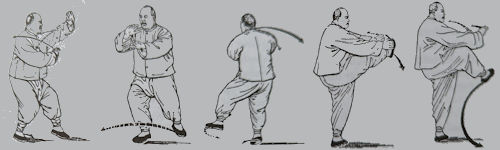
The traditional long forms can last as long as twenty to thirty minutes or more and may consist of as many as a hundred movements. Some forms are very short, with as few as eight movements. Most of the forms are practiced slowly with attention to detail and balance, but some forms are practiced with speed. Chen saber is an example; it consists of 21 movements and is usually performed in a minute or less.
Over the years I have studied more than two dozen forms, but I don’t try to maintain them all, all the time. I do often return to and relearn forms that I have allowed to lapse out of my practice. I use this TaiChiNotebook to keep handy the best instructional and demonstration videos along with lists of the movements in the various forms.
 Tai Chi Notebook